Bolivia Fintech Market 2026: Size, Growth, Trends, and Outlook
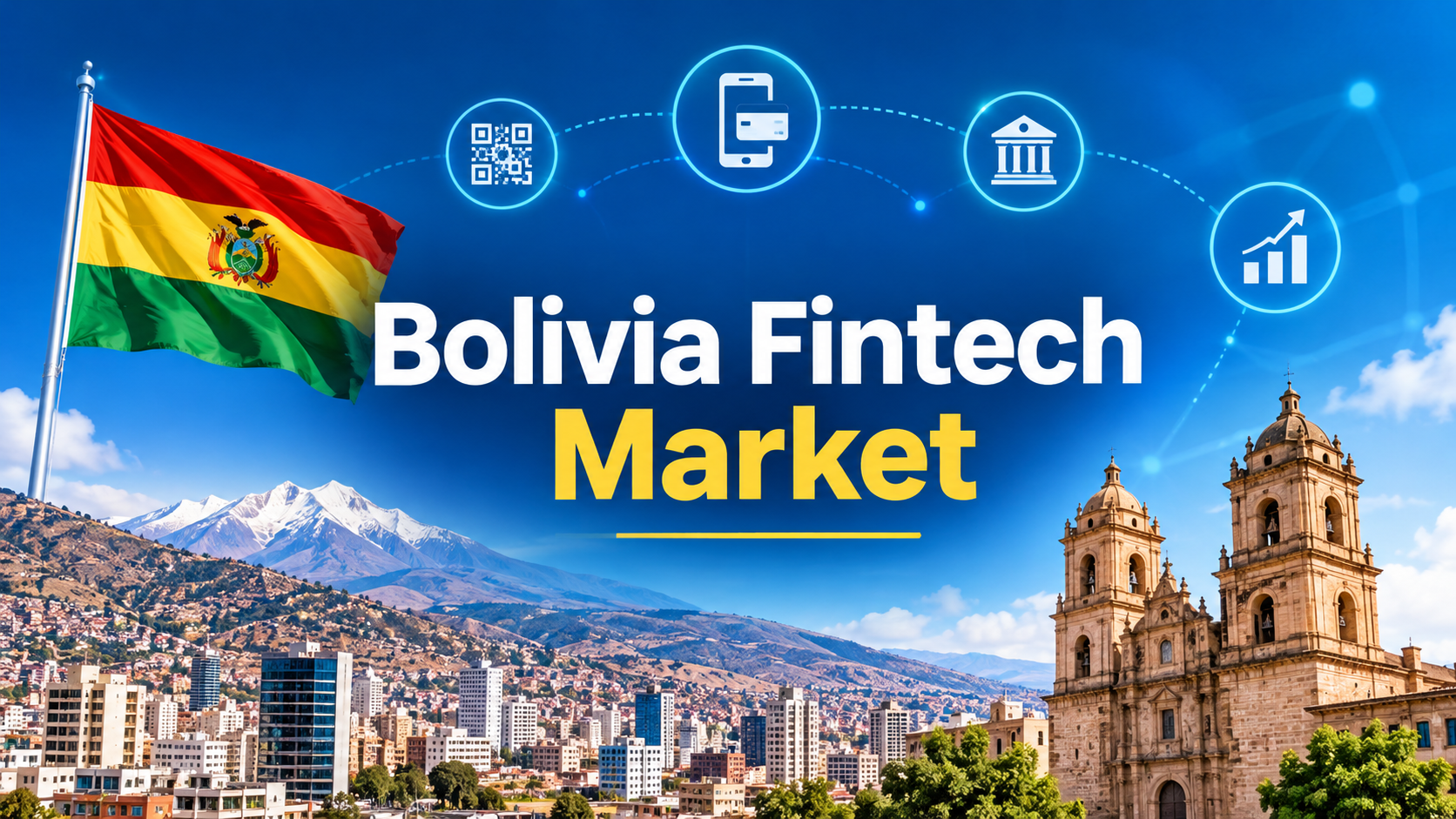
The Bolivia fintech market is gaining momentum in 2026 and the same is expected in 2027, driven by rapid digital payment adoption, interoperable QR infrastructure, mobile wallets, and evolving financial regulations.
Key highlights:
- Digital payments: QR transactions and mobile wallets are becoming mainstream payment methods.
- Market expansion: Mobile wallet transaction value reached Bs71.98 billion in 2025.
- QR adoption: Bolivia recorded 891 million QR transactions in 2025.
- Regulation: ASFI is bringing fintech companies into a formal supervisory framework.
- Crypto opportunities: Regulatory changes have opened the door to virtual asset services.
- Growth potential: Digital lending, financial inclusion, merchant payments, and embedded finance offer emerging opportunities.
Bolivia’s fintech ecosystem is transitioning from basic digital payments toward a broader technology-driven financial services market, although macroeconomic and infrastructure challenges remain.
Introduction
Bolivia’s fintech market is entering an important phase of digital transformation in 2026. Traditionally dependent on cash transactions and conventional banking infrastructure, the country is experiencing a significant shift toward digital payments, mobile financial services, and technology-enabled financial products.
The growing adoption of QR payments has become one of the most visible indicators of this transformation. Banks, financial institutions, payment providers, and fintech startups are increasingly offering digital solutions that make everyday transactions faster and more accessible.
The numbers highlight this momentum. According to our research data, Bolivia recorded approximately 891 million QR payment transactions in 2025, representing more than $51 billion in transaction value. Meanwhile, mobile wallet transactions reached Bs71.98 billion during the same year, demonstrating how quickly consumers and businesses are embracing digital financial services.
Regulatory developments are also reshaping the industry. The Banco Central de Bolivia (BCB) has encouraged payment digitalization, while the Autoridad de Supervisión del Sistema Financiero (ASFI) is developing a more structured approach to fintech supervision.
For international fintech companies, investors, and financial services professionals, Bolivia presents an emerging market opportunity. Its growing digital payment infrastructure, underserved customer segments, and evolving regulatory environment make it an interesting market to watch across Latin America.
Bolivia Fintech Market Size and Growth in 2026
Bolivia does not have a single, widely accepted official fintech market valuation that captures revenues across payments, lending, digital banking, insurtech, wealthtech, and cryptocurrency services. Therefore, transaction volumes, wallet adoption, regulatory developments, and the number of fintech companies provide more reliable indicators of market expansion than an unsupported revenue estimate.
The strongest evidence of growth comes from digital payment activity.
According to the Banco Central de Bolivia and industry reporting, mobile wallet transactions reached approximately Bs71.98 billion in 2025, compared with Bs27.50 billion in 2024. This represents growth of approximately 162% in transaction value.
The number of mobile wallet transactions also increased substantially, reaching approximately 691 million in 2025, compared with 338 million in 2024.
QR payments have experienced similar momentum. In 2025, Bolivia recorded 891 million QR transactions, with a reported transaction value of $51.293 billion. These transactions accounted for approximately 94% of interbank electronic fund transfer orders reported by the banking association.
Three factors explain this expansion:
- Growing digital adoption: Consumers increasingly use smartphones and banking applications for everyday financial transactions.
- Payment interoperability: QR infrastructure allows customers to transact across participating financial institutions.
- Regulatory modernization: Authorities are gradually establishing a framework for innovative financial services.
These indicators suggest that Bolivia’s fintech market is expanding rapidly, particularly in payment infrastructure and digital financial services. However, transaction value should not be confused with fintech industry revenue or total addressable market size.
Key Drivers of the Bolivia Fintech Market
Several economic, technological, and consumer-related factors are contributing to fintech adoption in Bolivia. The combination of expanding digital infrastructure and demand for convenient financial services is creating opportunities for both established financial institutions and emerging fintech companies.
1. Increasing smartphone and internet adoption
Digital connectivity is providing the foundation for fintech growth. World Bank data indicates that approximately 80% of Bolivia’s population used the internet in 2024. Greater connectivity is helping consumers access mobile banking, digital payments, and online financial services.
2. Demand for convenient payment solutions
QR payments have gained popularity because they allow customers to pay merchants without relying on cash or physical payment cards. Small retailers, restaurants, service providers, and independent merchants can accept digital payments without investing heavily in traditional point-of-sale infrastructure.
3. Financial inclusion
A substantial portion of Bolivia’s adult population remains outside formal banking services. According to the World Bank’s digital finance country snapshot, approximately 3.69 million adults were without an account in the 2024 reference dataset. This creates opportunities for mobile-first banking, digital wallets, alternative credit assessment, and affordable financial products.
4. Government and regulatory initiatives
The BCB has supported the development of interoperable payment infrastructure, while ASFI is strengthening oversight of technology-enabled financial services. These initiatives are helping create a more structured environment for digital financial innovation.
5. Changing consumer expectations
Consumers increasingly expect instant transfers, accessible mobile applications, convenient bill payments, and simplified financial transactions. Businesses also want faster settlements, better cash-flow visibility, and lower payment friction.
Together, these factors are creating demand for financial products that extend beyond conventional banking services.
Major Fintech Trends Shaping Bolivia in 2026
Bolivia’s fintech ecosystem is developing around several important trends. While digital payments remain the dominant growth engine, other segments are beginning to attract attention from technology companies and financial service providers.
1. QR payments and interoperable payment infrastructure
QR payments have become central to Bolivia’s digital financial ecosystem. The country’s interoperable QR infrastructure enables transfers between participating financial institutions, making digital payments more practical for consumers and merchants.
According to the 2025 payment data, QR transactions reached 891 million, highlighting the scale of adoption. Small-value transactions account for a significant proportion of this activity, demonstrating the technology’s relevance to everyday purchases.
2. Mobile wallets and digital banking
Mobile wallets are becoming increasingly important for person-to-person transfers, merchant payments, and everyday financial transactions.
The introduction of additional wallet providers is also expanding consumer choice. Existing and emerging providers are competing through simpler onboarding, payment convenience, and integration with broader financial services.
For fintech companies, this creates opportunities to develop specialized wallet infrastructure, merchant management tools, and payment processing solutions.
3. Cryptocurrency and virtual asset services
Bolivia’s approach to cryptocurrency has changed significantly. In June 2024, the BCB issued Resolution 082/2024, removing the previous prohibition on using electronic payment channels and instruments for transactions involving virtual assets.
This regulatory change created new opportunities for virtual asset-related services, including exchanges and technology-enabled financial products. However, permission to transact in virtual assets should not be interpreted as unrestricted authorization for every crypto business model.
4. Digital lending and alternative credit assessment
Digital lending represents another potential growth area. Fintech companies can use alternative data, digital onboarding, and automated credit assessment to improve access to financing for individuals and small businesses.
This is particularly relevant for micro, small, and medium-sized enterprises (MSMEs), which may face difficulties accessing traditional credit.
5. Embedded finance and merchant technology
Payment capabilities are increasingly becoming part of non-financial business platforms. Retailers, e-commerce businesses, logistics companies, and service providers can integrate payment acceptance and financial management tools into their existing workflows.
6. Insurtech and digital financial protection
Digital insurance distribution, simplified policy administration, and technology-enabled claims processing offer opportunities to improve insurance accessibility. These services could be particularly relevant in markets where traditional insurance penetration remains limited.
Overall, Bolivia’s fintech market is moving beyond payment digitization. The next stage will depend on how effectively companies turn existing payment infrastructure into broader financial services.
Bolivia’s Fintech Regulatory Landscape
Regulation is becoming one of the most important factors shaping Bolivia’s fintech market in 2026.
The country’s financial system is primarily supervised by ASFI, while the Banco Central de Bolivia oversees important aspects of the national payment system.
A significant development occurred on October 21, 2026, when ASFI announced that 36 Financial Technology Companies (Empresas de Tecnología Financiera or ETF) had entered its regulatory and supervisory process.
Of these, 23 companies were already operating with a Certificate of Adequacy, while 13 had received a No Objection to begin their incorporation process. The companies cover areas including blockchain, tokenized assets, virtual asset services, payment platforms, and financing solutions.
This development is important because it signals a shift toward more formal supervision of technology-driven financial businesses.
The regulatory framework is expected to improve transparency, consumer protection, and institutional accountability. However, companies must understand that entering the supervisory process is not equivalent to receiving a final operating license.
For international fintech providers, regulatory due diligence, local partnerships, compliance procedures, and customer protection should remain central to market-entry strategies.
Opportunities for Fintech Companies and Investors
Bolivia offers several opportunities for fintech companies seeking to expand across Latin America. Although its market is smaller than Brazil, Mexico, or Colombia, the growing adoption of digital financial infrastructure creates potential entry points.
Digital payment infrastructure: Payment gateways, merchant acquiring solutions, QR integrations, payment reconciliation, and transaction management tools can address growing demand from businesses.
MSME financing: Digital lending platforms can help small businesses access working capital, invoice financing, and alternative credit products.
Digital banking: Mobile-first financial products, simplified account opening, and accessible savings solutions can serve consumers who remain underserved by conventional banking.
Cryptocurrency infrastructure: Subject to applicable licensing and compliance requirements, virtual asset exchanges, custody solutions, and blockchain-based financial applications represent emerging opportunities.
Insurtech: Digital insurance distribution and automated claims management can help expand access to affordable financial protection.
For investors, the most attractive opportunities may lie in businesses with established distribution, strong compliance capabilities, and sustainable revenue models rather than companies relying exclusively on rapid user acquisition.
Challenges Facing the Bolivia Fintech Industry
Despite its growth potential, Bolivia’s fintech sector faces several structural challenges.
Macroeconomic instability, foreign currency shortages, inflation, and pressure on household purchasing power can affect consumer spending and business investment.
The IMF’s October 2026 country projections indicate that Bolivia’s real GDP could contract by approximately 3% in 2026, highlighting the difficult economic environment in which fintech companies must operate.
Other challenges include:
- Financial inclusion gaps: Millions of adults remain without formal financial accounts.
- Regulatory uncertainty: New fintech regulations require companies to adapt their business models and compliance systems.
- Cybersecurity: Growing digital transaction volumes increase the importance of fraud prevention and data protection.
- Digital literacy: Not all consumers have the knowledge required to use sophisticated financial applications safely.
- Currency and liquidity constraints: Foreign exchange restrictions can complicate international settlements and technology-related imports.
Addressing these challenges will be essential for building a sustainable fintech ecosystem.
Bolivia Fintech Market Outlook: What to Expect Beyond 2026
Bolivia’s fintech market is likely to become more diversified as digital payments create opportunities for additional financial products and services.
QR payments and mobile wallets should remain important growth drivers, while digital lending, embedded finance, insurtech, and virtual asset services could gain greater visibility.
The expansion of formal fintech supervision is another important development. Clearer operating requirements could encourage responsible investment and partnerships between established financial institutions and technology companies.
However, future growth will depend on economic stabilization, regulatory implementation, improved digital literacy, and continued investment in financial infrastructure.
For international investors and fintech professionals, Bolivia is an emerging market worth monitoring, particularly for companies focused on payment technology and financial inclusion.
Key Takeaways
1. Bolivia’s fintech ecosystem is expanding rapidly, with digital payments and mobile wallets emerging as the primary drivers of financial technology adoption.
2. QR payments recorded 891 million transactions in 2025, demonstrating strong consumer acceptance and growing digital payment infrastructure.
3. Mobile wallet transaction value reached Bs71.98 billion in 2025, highlighting opportunities for payment providers and digital financial services companies.
4. ASFI’s decision to bring 36 fintech companies into its regulatory process marks an important milestone for the country’s financial technology industry.
5. Cryptocurrency regulation has evolved since 2024, creating opportunities for compliant virtual asset service providers and blockchain-based financial solutions.
6. Digital lending, embedded finance, insurtech, and MSME financing represent potential growth areas beyond traditional payment services.
7. Macroeconomic instability, currency constraints, cybersecurity risks, and financial inclusion gaps remain important challenges for fintech companies and investors.
Conclusion
The Bolivia fintech market is undergoing a significant transformation in 2026, with digital payments, mobile wallets, and regulatory modernization reshaping the country’s financial services landscape.
The rapid adoption of QR payments demonstrates how digital infrastructure can change consumer behavior and create new opportunities for financial technology providers. With 891 million QR transactions recorded in 2025 and mobile wallet transaction value reaching Bs71.98 billion, Bolivia has established a strong foundation for further financial digitization.
Regulatory developments are equally important. ASFI’s move to bring 36 fintech companies into its supervisory framework represents progress toward a more structured and transparent fintech ecosystem. Changes to virtual asset regulations have also expanded the possibilities for innovation in cryptocurrency and blockchain-based financial services.
However, the market’s long-term potential will depend on overcoming economic instability, foreign currency constraints, infrastructure limitations, and financial inclusion challenges.
For fintech entrepreneurs, international financial institutions, and investors, Bolivia offers opportunities in payment processing, digital banking, lending, insurtech, and embedded finance.
Although it is not yet among Latin America’s largest fintech markets, Bolivia deserves attention as an emerging digital finance ecosystem. Its progress over the next few years could provide valuable insights into how smaller Latin American economies can accelerate financial inclusion through technology.
FAQs
1. What is the size of the Bolivia fintech market in 2026?
Bolivia does not publish a consolidated fintech market valuation. However, growing QR payments, mobile wallet transactions, and fintech registrations indicate significant expansion.
2. What are the major fintech trends in Bolivia?
Major trends include QR payments, mobile wallets, digital banking, cryptocurrency services, digital lending, embedded finance, and technology-enabled insurance distribution.
3. Is cryptocurrency legal in Bolivia?
Bolivia lifted its prohibition on electronic payment channels for virtual asset transactions in June 2024. Crypto-related activities remain subject to applicable regulations and supervision.
4. Who regulates fintech companies in Bolivia?
ASFI supervises financial institutions and fintech companies, while the Banco Central de Bolivia regulates and oversees important aspects of the national payment system.
5. What opportunities exist for foreign fintech companies in Bolivia?
Foreign fintech companies can explore payment processing, digital lending, merchant technology, blockchain infrastructure, insurtech, and financial inclusion solutions, subject to local regulatory requirements.
6. What is the future outlook for Bolivia’s fintech market?
Bolivia’s fintech market is expected to diversify as digital payments expand. Regulatory modernization, mobile banking adoption, and financial inclusion will influence its long-term development.